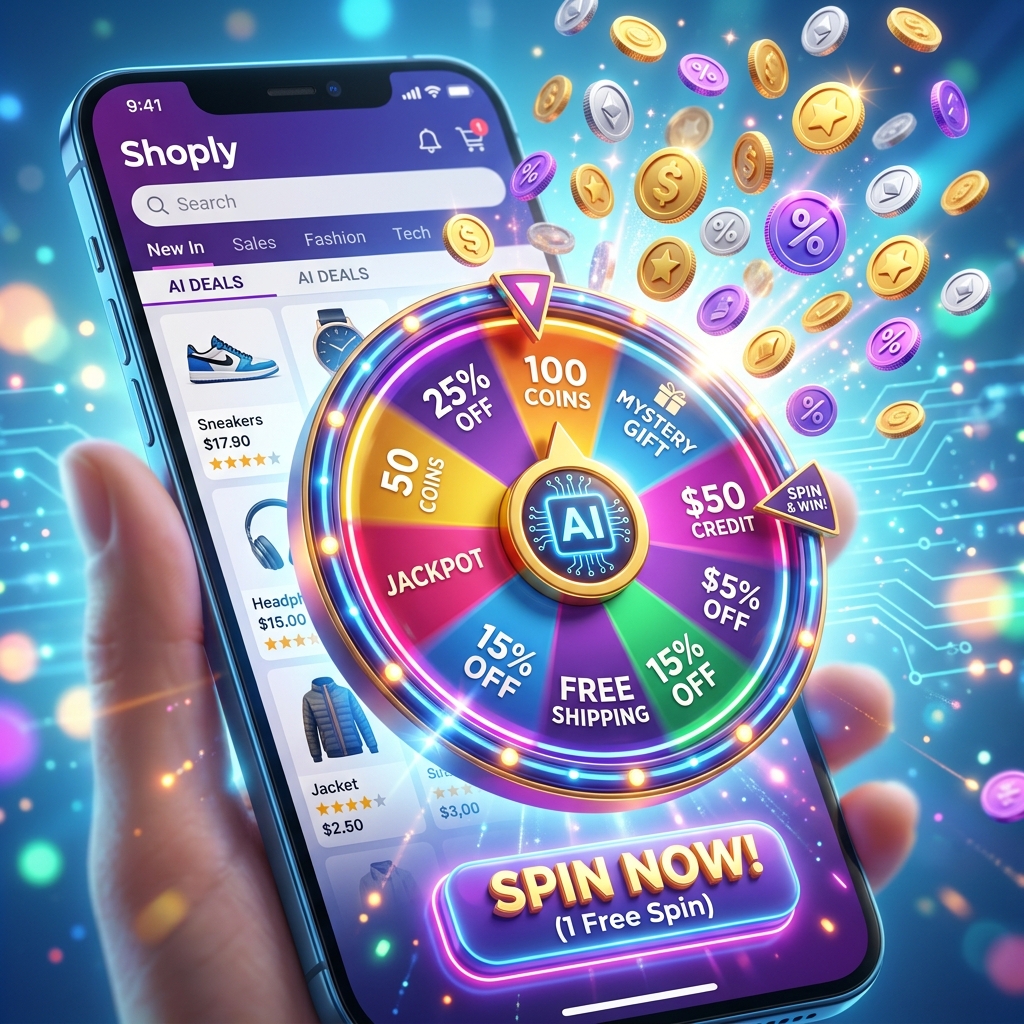
Customer acquisition costs are at an all-time high. Keeping an existing customer is mathematically much more profitable than acquiring a new one. To drive retention, e-commerce brands are turning to a powerful combination: Conversational AI and Gamification.
**Making Interaction Fun**
Nobody enjoys interacting with a static loyalty page. But when a chatbot challenges you to a quick trivia quiz about coffee beans to unlock a 10% discount on your espresso machine purchase, the dynamic shifts. Gamification makes the buying journey interactive and memorable.
**Dynamic Rewards Systems**
Vion AI's Gamification modules allow you to set up rules where user engagement translates into points, badges, or hidden discounts. For example, an AI assistant can trigger a "Spin the Wheel" game directly in the chat interface after a user has viewed three different products without adding to cart.
**Data Collection Through Play**
Gamification is the least intrusive way to collect zero-party data. A quick "Personality Quiz: What's your summer style?" deployed via the chatbot provides the AI with exact preferences, allowing for hyper-targeted product recommendations immediately after the game ends. Playful AI is profitable AI.
How this topic connects to Vion AI growth
Gamification and AI: Building Extreme Loyalty in E-Commerce is not just an informational article for Vion AI; it is an organic acquisition and conversion page focused on ecommerce revenue. The content should not only describe the visitor's problem. It should also show which Vion AI module, landing page, and action can solve that problem.
Combine conversational AI with gamified rewards to increase user retention, engagement, and repeat purchases. To make that claim stronger, each article should carry a practical example, a measurement angle, and relevant product links. Short content may help indexing, but deeper content gives search engines expertise signals and gives readers a reason to start a trial or book a demo.
The expected business outcome is a next-page action. After learning about the topic, the reader should naturally move to a related product page, industry solution, pricing page, or demo flow.
The refresh loop is part of the content value. The first publish is only the starting point; Search Console queries, Google Ads search terms, and real customer questions should add new examples, comparisons, and objection-handling sections over time.
Each article should work as part of a topic cluster. The pillar page explains the main solution, supporting articles answer specific questions, and product pages move the reader toward action. That grows the content network, not just the content count.
The practical value increases when the reader can adapt the advice to their own business. The article should answer which data source is needed, which integrations should be prepared before launch, which metric proves success, and when the conversation should hand off to a human teammate. That turns the page into sales education, not only traffic acquisition.
This content should also feed the campaign learning loop. Search terms from Google Ads, low-CTR organic queries, and repeated questions from real chatbot conversations should enter the same backlog. Over time, the blog, product page, and AI answers begin using the same language as the customer.
Internal linking is part of that loop. At the end of the article, the reader should be able to move not only to another post, but also to the relevant product, industry solution, pricing, or demo page; those transitions make the commercial value of organic traffic visible.
After publishing, success should not be measured only by ranking. Product-page clicks, pricing views, demo clicks, signup attempts, and visitors who start a chatbot conversation should be reviewed together. That shows which content is actually producing pipeline impact.
This measurement habit also increases the value of shorter articles. Every update that adds a new example, internal link, or objection answer improves ranking potential and gives the sales team a clearer explanation to reuse.
Implementation checklist
- 1Define the search intent in one sentence: is the user learning, comparing options, or getting close to buying a solution?
- 2Include at least one practical use case: the visitor question, AI response, CTA, and expected conversion step should appear together.
- 3Link to the relevant Vion AI module and industry page so blog traffic moves into product discovery.
- 4Track CTA clicks, pricing views, signup, demo, and lead events separately instead of treating all sessions as equal.
- 5Use Search Console data to update the title, meta description, and internal links once low-CTR queries appear.
Metrics to track
- Organic impressions and non-brand click growth
- Click-through from blog to product or industry pages
- Pricing, signup, demo, and lead CTA clicks
- Alignment with related Google Ads search terms
- Conversion-assisted sessions by article